Region 01 · Northwest
Waterfowl & Ag
The Delta
Flat, fertile, and famous — the deepest soil in North America and the best wintering grounds for mallards on the continent.
Explore parcels →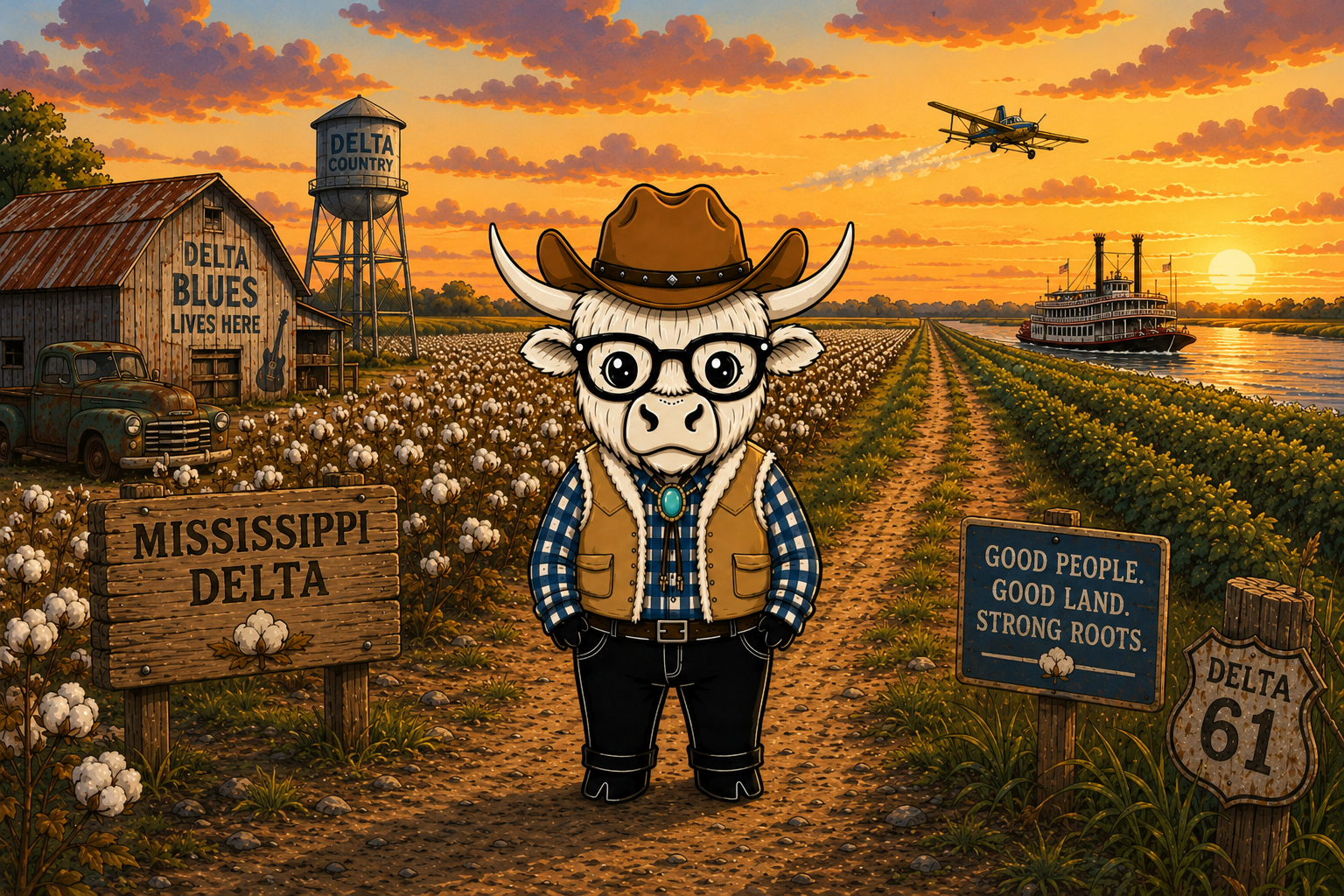
Flat, fertile, and famous — the deepest soil in North America and the best wintering grounds for mallards on the continent.
Explore parcels →The Mississippi Delta isn't actually a delta — it's an alluvial floodplain, 200 miles long and 70 miles wide at its broadest, formed by 10,000 years of the Mississippi and Yazoo Rivers depositing topsoil. The result is some of the deepest, most fertile farmland in North America. Cotton built it. Catfish, rice, soybeans, and corn run it today. Outside Greenville, Yazoo City, Clarksdale, and Cleveland, the landscape is largely flat, agricultural, and beautiful in a way that requires you to slow down and look. The Delta is also one of the legendary North American flyway destinations for wintering mallards and the cultural heart of blues music — Clarksdale to Helena and back, Highway 61 the whole way. Land here moves slower and stays cheaper per acre than anywhere else in the state, but the buyer pool is more specialized.
Owner-financed, no banks, no credit check.
We're adding new parcels in this region on a regular basis. Want a heads up about upcoming inventory before it goes live? Get in touch and we'll keep you in the loop.
Talk to usFlat, fertile, dark-soiled, and broken up by agricultural drainage ditches, river bends, and oxbow lakes. Cypress brakes line the lower waterways. Bottomland hardwoods — cottonwood, sweetgum, sycamore, pin oak — dominate where ag hasn't reclaimed the ground. Most non-agricultural parcels are reverted farmland or timbered bottomland, and both have their place.
The Delta sits squarely under the Mississippi Flyway, and Yazoo, Sunflower, Bolivar, and Washington Counties make up some of the best wintering mallard country on the planet. Greenwood, Indianola, Greenville, and Clarksdale all have established guide-and-club ecosystems that go back generations. Private duck land sells at a premium and rarely lasts long on the open market. If you're a serious waterfowler looking for a long-term lease alternative, this is the region.
Soybeans and corn lead acreage now, with cotton and rice still significant. Catfish ponds dot the central Delta — Mississippi produces about half of all farm-raised catfish in the U.S. Investment-grade row-crop land trades on cash-rent yield (typically $150–$250 per tillable acre annually) and the depth of the topsoil. Smaller hobby tracts and recreational parcels are what we focus on — we're not in the row-crop investment business, but we'll point you toward operators who are if that's what you need.
The Delta has produced more American music than any other 100-mile stretch on the continent. Clarksdale in Coahoma County is the de-facto capital of the blues — Ground Zero Blues Club, Red's, the Delta Blues Museum. Cleveland in Bolivar County is home to Delta State University and the Grammy Museum Mississippi. Greenville is the largest city in the region and the unofficial capital of the lower Delta. Indianola, Belzoni, Yazoo City, and Greenwood each have their own draws — and each is genuinely affordable compared to the rest of the state.
Flood zone designation matters in the Delta. Anything inside the Yazoo Backwater Area or along the lower Mississippi River corridor needs careful FEMA flood-map review before you commit — insurance and build restrictions follow that designation. Mineral rights are sometimes severed from surface rights in older parcels, especially in counties with oil and gas history. Roads can be agricultural easements rather than dedicated county roads — confirm the access type. Where applicable, we list flood zone status and mineral-rights status on every parcel.
Recreational and hunting tracts in the Delta tend to run larger — 40 to 200+ acres is common, because the use case usually needs the acreage. Smaller homestead parcels of 5–20 acres exist but are concentrated in the foothills along the eastern edge where the topography starts to roll.
Lorem ipsum dolor sit amet, consectetur adipiscing elit, sed do eiusmod tempor incididunt ut labore et dolore magna aliqua. Ut enim ad minim veniam, quis nostrud exercitation ullamco laboris nisi ut aliquip ex ea commodo consequat. Duis aute irure dolor in reprehenderit in voluptate velit esse cillum dolore eu fugiat nulla pariatur.
Block quote
Ordered list
Unordered list
Bold text
Emphasis
Superscript
Subscript
waterfowl hunting, farming and ag investment, blues history, river-bottom recreational land
Greenville, Cleveland, Greenwood, Clarksdale, Indianola, Yazoo City
Tunica, Coahoma, Quitman, Tallahatchie, Bolivar, Sunflower, Washington, Sharkey, Issaquena, Leflore, Humphreys, Yazoo, Holmes
Owner-financed, family-run, real conversations. No banks, no credit checks. We'll tell you what's available and what's coming.