Region 07 · South · Coastal Mississippi

Gulf Coast Salt air, sandy hair, good life.

Family-owned land buyers since 2017. The Mississippi Gulf Coast — Hancock, Harrison, and Jackson counties — runs **$2,500–$40,000+/acre** depending on distance from the water, with year-round growing season and serious hurricane exposure to factor in. We close in 14 days, all cash, all-in.

Questions? howdy@debrosland.com · Office hours 9am–6pm Mountain
Authored by Seth & Bryce Drehle-Ewan, Co-Founders · About Debrosland
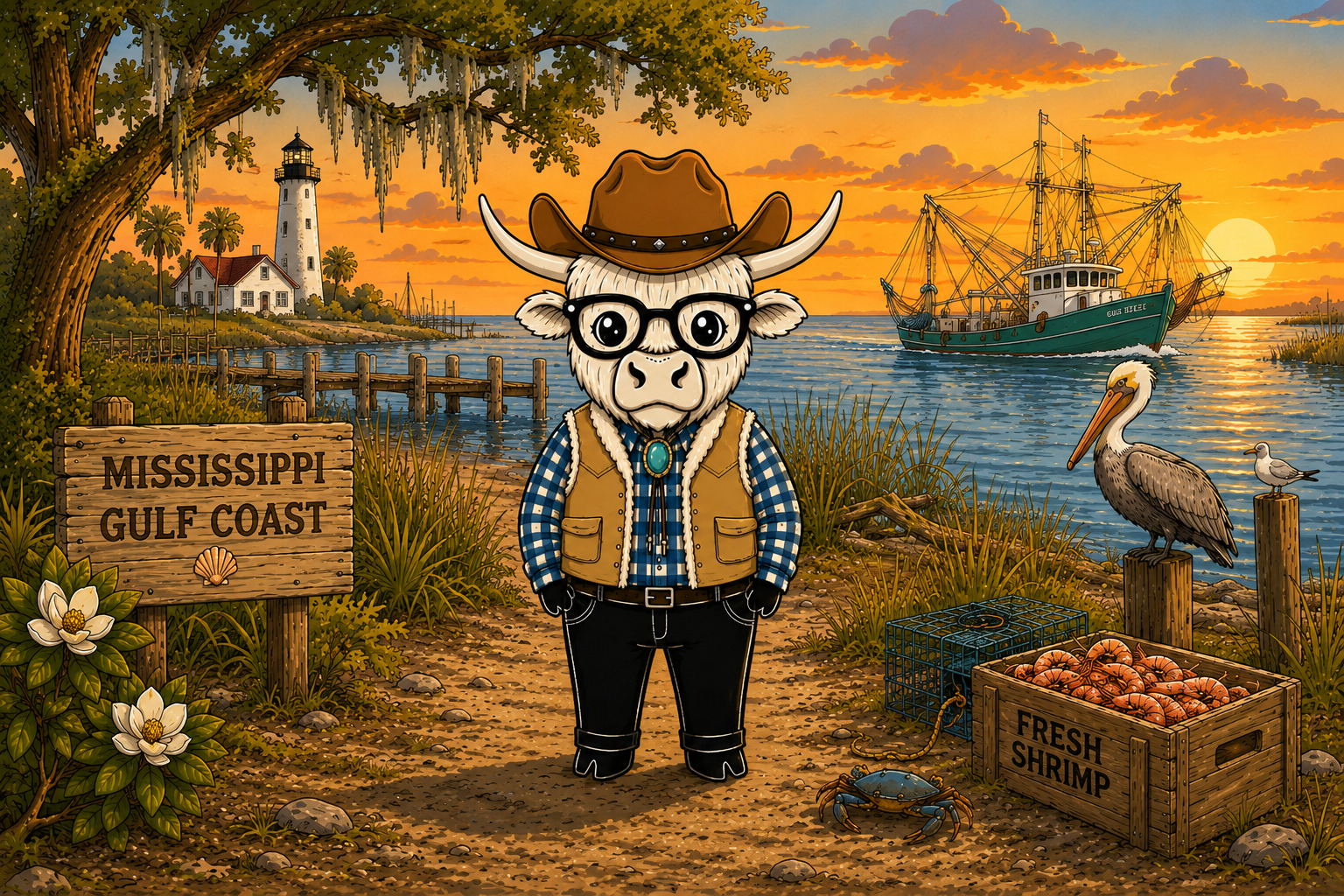
Benji the Highland Cow in Gulf Coast, Mississippi
6
Counties
$2,500–$40K
Per Acre
1–80+ ac
Parcel Range
Gulfport-Biloxi
Anchor Hub

The Mississippi Gulf Coast is the state's most geographically varied stretch — 62 miles of beachfront, three coastal counties (Hancock, Harrison, Jackson), barrier islands, salt marsh, casino-driven tourism, and the Ingalls Shipbuilding yard at Pascagoula that builds U.S. Navy destroyers. The growing season is essentially year-round. The trade-off is hurricane exposure: eight major hurricanes have struck the Mississippi coast since 1895, including Hurricane Camille in 1969 and Hurricane Katrina in 2005. Wind insurance is a real line item on coastal budgets, and the further inland you go, the cheaper it gets. Land closest to the beach commands a premium and a more complex insurance picture; parcels 15–25 miles inland in Hancock, Harrison, and Jackson Counties offer most of the lifestyle benefit at a fraction of the carrying cost. Buyers here are split between retirees, casino-and-hospitality workers, military, and shipyard families.

We're adding new parcels in this region on a regular basis. Want a heads up about upcoming inventory before it goes live? Get in touch and we'll keep you in the loop.

Talk to us
GROUND TRUTH

The lay of the land

What the land looks like

Sandy soils close to the coast giving way to pine flats and bottomland hardwoods inland. Salt marshes line the immediate coast and the lower river corridors — the Pearl, Wolf, Jourdan, Tchoutacabouffa, Biloxi, Pascagoula, and Escatawpa Rivers all empty into the Mississippi Sound. Topography is mostly flat to gently rolling. The barrier islands — Cat, Ship, Horn, Petit Bois, Round — sit 10 miles offshore and are part of the Gulf Islands National Seashore.

The casino economy

Twelve coastal casinos run along Highway 90 from Bay St. Louis to Biloxi to Gulfport. Hospitality and gaming are the largest private-sector employers in Harrison County. Wages are solid for the region; the surrounding residential demand keeps a steady market for suburban and exurban acreage.

Ingalls and the Navy

Ingalls Shipbuilding in Pascagoula employs about 11,500 people and is the largest manufacturer in Mississippi. Ingalls builds destroyers, amphibious assault ships, and Coast Guard cutters for the U.S. Navy. The shipyard footprint anchors Jackson County's economy and supports a strong middle-class home and land market across the eastern coast.

Why retirees come here

Mild winters, year-round outdoor access, fishing, golf, casinos, beaches, and a lower cost of living than Florida or coastal Alabama draw a steady stream of retirees from Louisiana, Tennessee, and the Midwest. Pass Christian, Bay St. Louis, Ocean Springs, and Diamondhead all have meaningful retiree communities. Property taxes are low. Homestead exemptions for seniors are generous.

Hurricane reality

This region gets hit. Insurance is the line item that surprises buyers most often. A typical home within a few miles of the coast can have wind coverage in the $3,000–$7,000/year range, depending on age, construction, and elevation. Flood insurance through the National Flood Insurance Program adds another $500–$2,500. Inland parcels (15+ miles from the beach) drop insurance costs dramatically. Buying east of Highway 67 typically gets you out of the most expensive wind zones.

What to watch for

Verify FEMA flood zone designation on every coastal or near-coastal parcel — it dictates insurance requirements and build-elevation rules. Lots of coastal lots have setback requirements from the dune line or the marsh edge. Mineral rights are usually intact but always worth checking on parcels along the lower rivers. Saltwater intrusion can affect shallow wells; deeper wells (200+ feet) are the safer call near the coast.

Typical parcel sizes

Coastal listings tend toward smaller — 1 to 10 acres is common because the coastal demand pushes density. Inland in Hancock, Stone, and northern Jackson Counties, parcels open up to 20–80+ acres at far more affordable rates while still keeping the coast in easy weekend driving range.

Gulf Coast
HOWDY FROM

Gulf Coast

Howdy from the Gulf Coast! Casinos, barrier islands, shrimp boats out of Pascagoula, and a year-round growing season. It's the most varied stretch of Mississippi I know — just keep an eye on hurricane season and you'll do fine here.

At a glance

Region quick reference

Best for

beach access, casino and hospitality jobs, military and shipyard families, retirees, fishing

Anchor towns

Biloxi, Gulfport, Bay St. Louis, Pass Christian, Ocean Springs, Pascagoula, Diamondhead

Counties

Hancock, Harrison, Jackson, Pearl River, Stone, George

FREQUENTLY ASKED

Common questions

How much does land cost on the Mississippi Gulf Coast?

Direct beachfront and immediate-coastal land is the most expensive — small lots in Pass Christian, Bay St. Louis, or Ocean Springs often run $15,000–$40,000+ per acre, sometimes much higher for waterfront. Move 5–10 miles inland and prices drop sharply: 1–5 acre residential parcels in northern Harrison or Jackson Counties typically run $5,000–$12,000/acre. Inland Hancock, Stone, and northern Jackson Counties open up to 20–80+ acre parcels at $2,500–$5,000/acre. The further from the beach, the lower the price and the lower the carrying cost.

What is the hurricane insurance cost for Mississippi Gulf Coast land?

Insurance is the line item that surprises Gulf Coast buyers most often. A typical home within a few miles of the coast can have wind coverage in the $3,000–$7,000/year range depending on age, construction, and elevation. Flood insurance through the National Flood Insurance Program adds another $500–$2,500/year. Inland parcels (15+ miles from the beach) drop insurance costs dramatically. Buying east of Highway 67 typically gets you out of the most expensive wind zones. Vacant land itself doesn't require insurance, but build planning should factor coverage cost early.

Where can I buy affordable Gulf Coast land inland from the beach?

Inland Hancock County (around Picayune and the Poplarville border), northern Harrison County (north of I-10), and northern Jackson County (around Vancleave and Wade) all offer larger, more affordable parcels within a 30-minute drive of the coast. Stone County (Wiggins) and George County (Lucedale) push further inland with even better per-acre pricing. The lifestyle trade-off is real — you give up walkable beach access for acreage and lower carrying cost. Most family-compound and retirement buyers in the region end up 15–25 miles inland.

Can I buy Mississippi Gulf Coast land with owner financing?

Yes. Debrosland offers owner financing directly on every Gulf Coast parcel we sell — no bank, no credit check, and closing through a real estate attorney or title company. Owner financing structure typically involves a down payment plus a fixed monthly payment over a set term. The Gulf Coast buyer profile — retirees, casino-and-hospitality workers, military families, and shipyard families — often prefers owner financing over conventional rural-land bank loans. Specific terms are posted on each listing.

Is land near the Pascagoula shipyard a good investment?

Ingalls Shipbuilding in Pascagoula employs about 11,500 people and is the largest manufacturer in Mississippi. The shipyard footprint anchors Jackson County's economy and supports a steady middle-class home and land market across the eastern coast. Land within commuting distance of Ingalls — Pascagoula itself, Gautier, Moss Point, Ocean Springs, and inland Jackson County toward Vancleave — sees reliable demand from shipyard families. Defense-contract cycles can swing employment somewhat, but the long-term Navy contract pipeline keeps demand stable.

What's the FEMA flood zone risk on Gulf Coast property?

Verify FEMA flood zone designation on every coastal or near-coastal parcel before closing — it dictates insurance requirements, build-elevation rules, and sometimes mortgage availability. Many coastal lots have setback requirements from the dune line or the marsh edge. Inland Gulf Coast parcels (15+ miles from the immediate coast) are mostly outside the highest-risk zones, though river-corridor parcels along the Pearl, Wolf, Pascagoula, or Escatawpa can still carry meaningful flood designation. Your real estate attorney or title company pulls the current FEMA map for each parcel as part of standard pre-closing review.

Where do retirees typically buy on the Mississippi Gulf Coast?

Pass Christian, Bay St. Louis, Ocean Springs, and Diamondhead all have meaningful retiree communities with established amenities, restaurants, and walking-friendly downtowns. Mild winters, year-round outdoor access, fishing, golf, casinos, beaches, and a lower cost of living than Florida or coastal Alabama draw a steady stream of retirees from Louisiana, Tennessee, and the Midwest. Mississippi property taxes are low and the homestead exemption for seniors is generous. Most retiree buyers choose smaller residential parcels rather than acreage.

Is the Mississippi Gulf Coast safer than Florida or Alabama for buying?

The Mississippi coast gets hit by hurricanes — eight major hurricanes have struck since 1895, including Camille (1969) and Katrina (2005). The risk profile is real and comparable to the Alabama and Louisiana coasts. What makes Mississippi attractive relative to Florida is significantly lower property taxes, lower insurance baseline costs on inland parcels, lower overall cost of living, and slower price appreciation that keeps the market more affordable for buyers entering today. Florida has more amenity density; Mississippi has more value per dollar.

TALK TO US ABOUT

Gulf Coast

Owner-financed, family-run, real conversations. No banks, no credit checks. We'll tell you what's available and what's coming.